Energy-Saving HVAC Tips for Massachusetts Winters
June 22, 2026
Massachusetts winters are no small challenge. From late November through March, temperatures routinely drop well below freezing, and homeowners across the state face one of the most demanding heating seasons in the country. With heating accounting for a significant portion of household energy consumption during these months, finding practical ways to reduce waste and improve performance is not just a smart financial move — it is a matter of comfort and reliability.
The good news is that many of the most impactful changes are well within reach for the average homeowner. Whether your home runs on a forced-air furnace, a heat pump, or a boiler system, the same core principles apply: seal what leaks, upgrade what is outdated, and maintain what you rely on. A strategic approach to
HVAC performance during winter months can mean the difference between a system that struggles under pressure and one that keeps your home warm without running constantly. This guide walks through the most proven and practical methods for reducing heating bills and improving HVAC performance in Massachusetts homes.
Sealing and Insulating Your Ductwork
Why Ducts Matter More Than Most Homeowners Realize
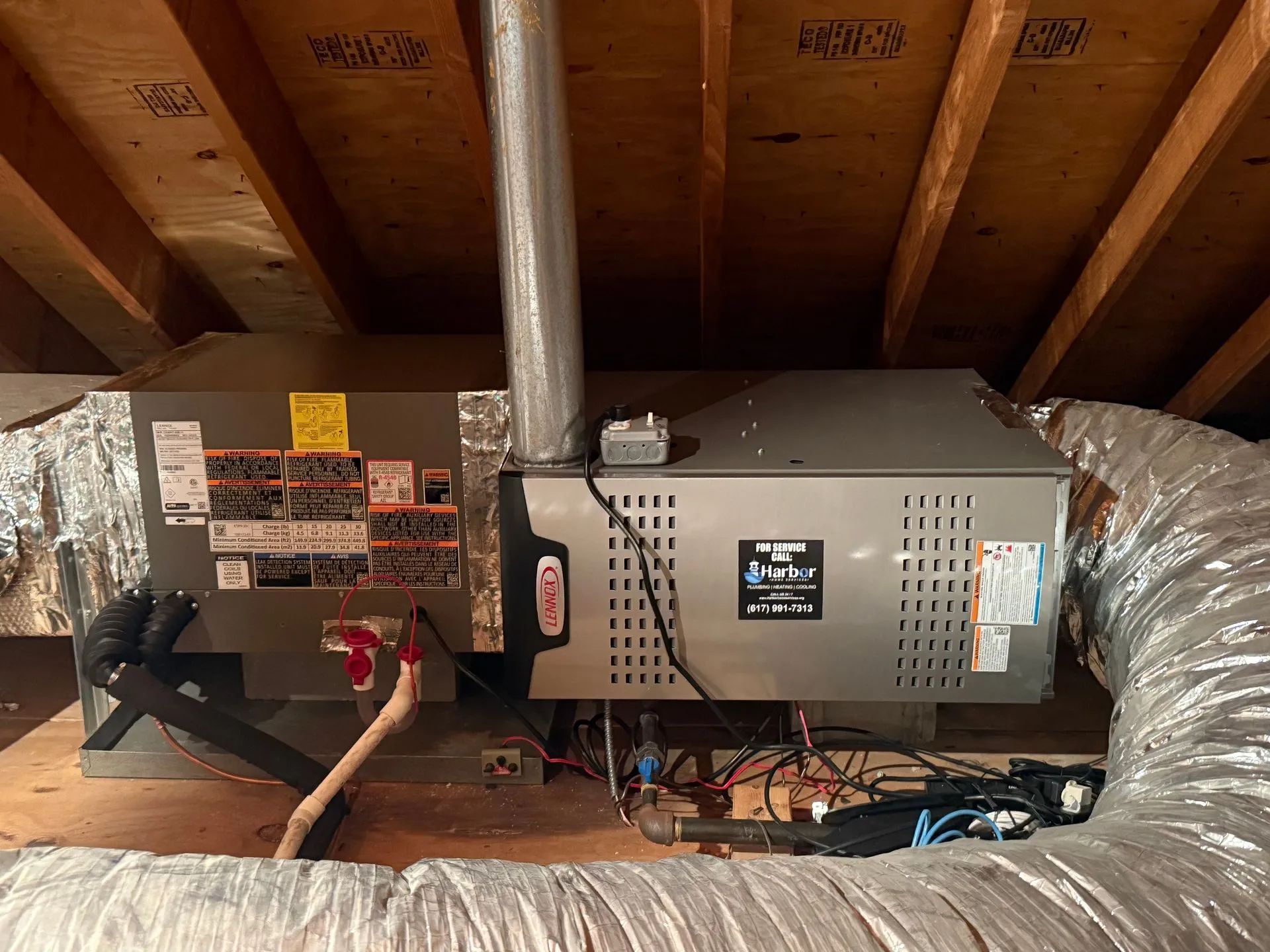
In a forced-air heating system, your ductwork is the delivery network for every BTU your furnace produces. When that network leaks, you are paying to heat your attic, crawl space, and wall cavities rather than your living areas. Studies from the U.S. Department of Energy have found that leaky ducts can reduce heating system efficiency by up to 30 percent in some homes.
Massachusetts homes, particularly older construction common throughout the Greater Boston area and MetroWest region, are especially prone to duct leakage. Years of temperature cycling cause joints to separate and seals to degrade.
What to Do
Inspect accessible duct runs in your basement, attic, and utility closet. Look for visible gaps at joints, disconnected sections, or sections wrapped in deteriorating tape. Standard gray duct tape is not a long-term solution — mastic sealant or metal-backed foil tape are the correct materials for sealing duct joints.
After sealing, insulating ducts that run through unconditioned spaces is equally important. Uninsulated ducts in a cold attic lose heat rapidly even when the ductwork is sealed. Wrapping these sections with duct wrap insulation rated for the application significantly reduces thermal loss.
For homeowners unsure about the condition of their ductwork, a professional duct leakage test can quantify the problem and identify the most significant problem areas before repairs begin.
Upgrading to a Programmable or Smart Thermostat
The Case for Smarter Temperature Control
One of the simplest and most impactful changes any Massachusetts homeowner can make is switching from a manual thermostat to a programmable or smart model. The logic is straightforward: there is no reason to heat your home to 70 degrees while everyone is at work or asleep under heavy blankets.
The U.S. Environmental Protection Agency estimates that homeowners can reduce heating consumption by around 10 percent per year by turning their thermostat back 7 to 10 degrees for eight hours each day. A programmable thermostat automates this process so you never have to think about it.
Smart Thermostats Go Further
Smart thermostats add another layer of intelligence. Models from brands like Ecobee and Honeywell Home use occupancy sensors, learning algorithms, and remote access through smartphone apps to optimize temperature throughout the day. Some models integrate with local weather data to anticipate temperature drops and adjust system run times accordingly.
For homes with zoned systems, smart thermostats can work in combination with zone dampers to heat only the areas of the home in active use, reducing unnecessary load on your furnace or air handler. In Massachusetts, where many homes have both heated and unheated spaces, this kind of targeted control pays real dividends during long cold stretches.
Scheduling Seasonal HVAC Inspections
Prevention Is Always Less Disruptive Than Repair
A heating system that fails in January is far more than an inconvenience in Massachusetts. A professional seasonal inspection before the cold weather arrives gives you the opportunity to catch developing problems — worn igniters, cracked heat exchangers, failing motors, or low refrigerant in heat pump systems — before they become emergencies.
During a standard heating inspection, a qualified technician will check and clean the burner assembly, inspect the heat exchanger for cracks, test combustion efficiency, verify proper airflow, and check all electrical connections and safety controls. On heat pump systems, the inspection also covers refrigerant charge, defrost cycle operation, and coil condition.
What a Tune-Up Actually Accomplishes
Beyond safety checks, a properly tuned furnace or boiler operates closer to its rated efficiency. A furnace running with a partially clogged burner, dirty flame sensor, or improperly calibrated gas valve consumes more fuel than necessary to reach your thermostat's set point. Correcting these issues through an annual tune-up restores performance to where it should be.
A useful benchmark to keep in mind:
| System Type | Recommended Inspection Frequency | Key Items Checked |
|---|---|---|
| Gas Furnace | Annually before heating season | Burner, heat exchanger, filter, airflow |
| Boiler | Annually before heating season | Flue, pressure, heat exchanger, expansion tank |
| Heat Pump | Twice yearly (spring and fall) | Refrigerant, coils, defrost cycle, airflow |
| Ductless Mini-Split | Annually | Filter, coil, refrigerant, drainage |
Improving Home Envelope Performance
Your HVAC System Is Only as Good as Your Home's Shell
Even a high-efficiency furnace will run far longer than necessary if your home has significant air leaks or insufficient insulation. In Massachusetts, where heating degree days exceed 5,000 annually in most regions, envelope performance has a direct relationship with how hard your heating system has to work.
Common air leakage points include gaps around recessed light fixtures in ceilings below attic spaces, unsealed penetrations where pipes and wires enter the building envelope, gaps at the sill plate where the house framing meets the foundation, and around window and door frames where caulking has cracked or pulled away.
Where to Start
Attic air sealing and insulation offer the highest return in most Massachusetts homes. Heat rises, and if your attic bypasses are open, your furnace is essentially heating the outdoors. The Massachusetts Clean Energy Center and MassSave program both offer rebates and incentives for air sealing and insulation work that can make these upgrades more financially accessible.
A blower door test, performed by a certified energy auditor, identifies and quantifies air leakage throughout the entire building envelope. This gives you a prioritized roadmap rather than a guessing game.
Maintaining Airflow for Peak Furnace Performance
The Role of Filters, Vents, and Airflow Balance
Restricted airflow is one of the most common and easily avoided causes of reduced heating performance. A clogged air filter forces your furnace blower to work harder to move the same volume of air, which increases energy use and puts additional wear on the motor and heat exchanger.
During the heating season in Massachusetts, check your air filter monthly. Homes with pets, older ductwork, or higher dust levels may need filter replacement more frequently than the manufacturer's general guidance suggests. A 1-inch pleated filter with a MERV rating between 8 and 11 provides good filtration without creating excessive resistance.
Vent and Register Checks
Walk through your home and verify that supply and return registers are open and unobstructed. Furniture placed over or directly in front of registers, or closed registers in unused rooms, disrupts the designed airflow balance of your system. In a forced-air system, this imbalance can create pressure problems that reduce delivery to other areas of the home and in some cases cause the heat exchanger to overheat.
Baseboard and radiator systems require similar attention. Dust and debris accumulation on baseboard fins or radiator surfaces acts as insulation, reducing heat transfer into the room and causing boiler systems to run longer to reach set point.
Dedicated to Keeping Framingham Comfortable Through Every Winter
Managing heating performance through a Massachusetts winter comes down to a few core principles: seal what leaks energy, upgrade controls to match actual usage patterns, maintain equipment before problems develop, and make sure your home's envelope supports the work your HVAC system is doing. Duct sealing, smart thermostat upgrades, annual inspections, attic insulation, and consistent filter maintenance each address a different layer of the problem, and together they build a home that stays warmer with less effort from your heating equipment. No single change solves everything, but a systematic approach across all these areas can produce meaningful reductions in heating demand and meaningful improvements in comfort through even the coldest stretches of a New England winter.
Harbor Home Services
has been serving homeowners throughout Framingham, Massachusetts and the surrounding MetroWest region for over 10
years. We specialize in
HVAC and plumbing services, bringing hands-on technical knowledge and honest guidance to every job we take on. When it comes to heating performance, we understand what Massachusetts winters actually demand. We provide thorough seasonal inspections, duct sealing and testing, smart thermostat installation, and full system tune-ups for furnaces, boilers, heat pumps, and ductless systems. Our work is grounded in real diagnostic data, not assumptions, and we take the time to explain what we find and what we recommend before any work begins. Whether you are preparing your system for winter, troubleshooting a performance issue mid-season, or planning an equipment upgrade, Harbor Home Services
brings the experience and attention needed to get it right.
Frequently Asked Questions
How often should I schedule an HVAC inspection in Massachusetts?
For gas furnaces and boilers, once per year before the heating season is the standard recommendation. Heat pumps benefit from inspections twice per year, in fall and spring, to cover both heating and cooling cycles and maintain refrigerant and coil condition.
What are the signs that my ducts may be leaking?
Common indicators include rooms that are noticeably harder to heat than others, higher-than-expected energy bills relative to usage, excessive dust around supply registers, and a furnace that runs for long periods without reaching the set temperature in living areas.
Is a smart thermostat compatible with all HVAC systems?
Most modern smart thermostats work with forced-air furnaces, central air conditioners, and heat pumps, but compatibility depends on your system's wiring. Two-stage systems, heat pumps with auxiliary heat, and systems without a common wire may require specific models or an additional wiring adapter.
Does sealing my home too tightly create indoor air quality problems?
Proper air sealing focuses on uncontrolled leakage through the building envelope, not on eliminating ventilation. A well-sealed home should pair air sealing with a mechanical ventilation strategy, such as an energy recovery ventilator, to maintain fresh air exchange without sacrificing thermal performance.
What MERV rating should I use for my furnace filter during winter?
A MERV 8 to 11 rating provides strong particle capture without creating excessive airflow restriction for most residential systems. Higher-rated filters capture finer particles but can reduce airflow if your system is not designed to handle the added resistance, so check your equipment manual before upgrading filter ratings.